

By Janet Wight
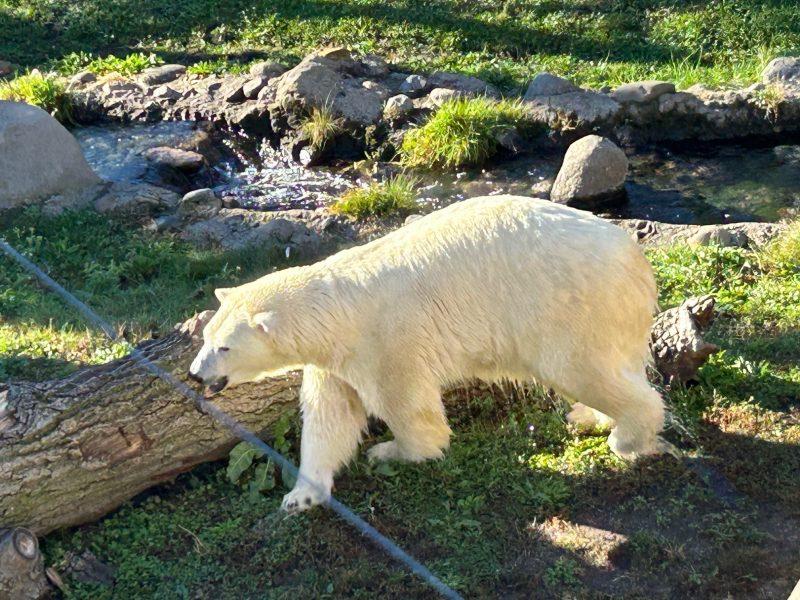
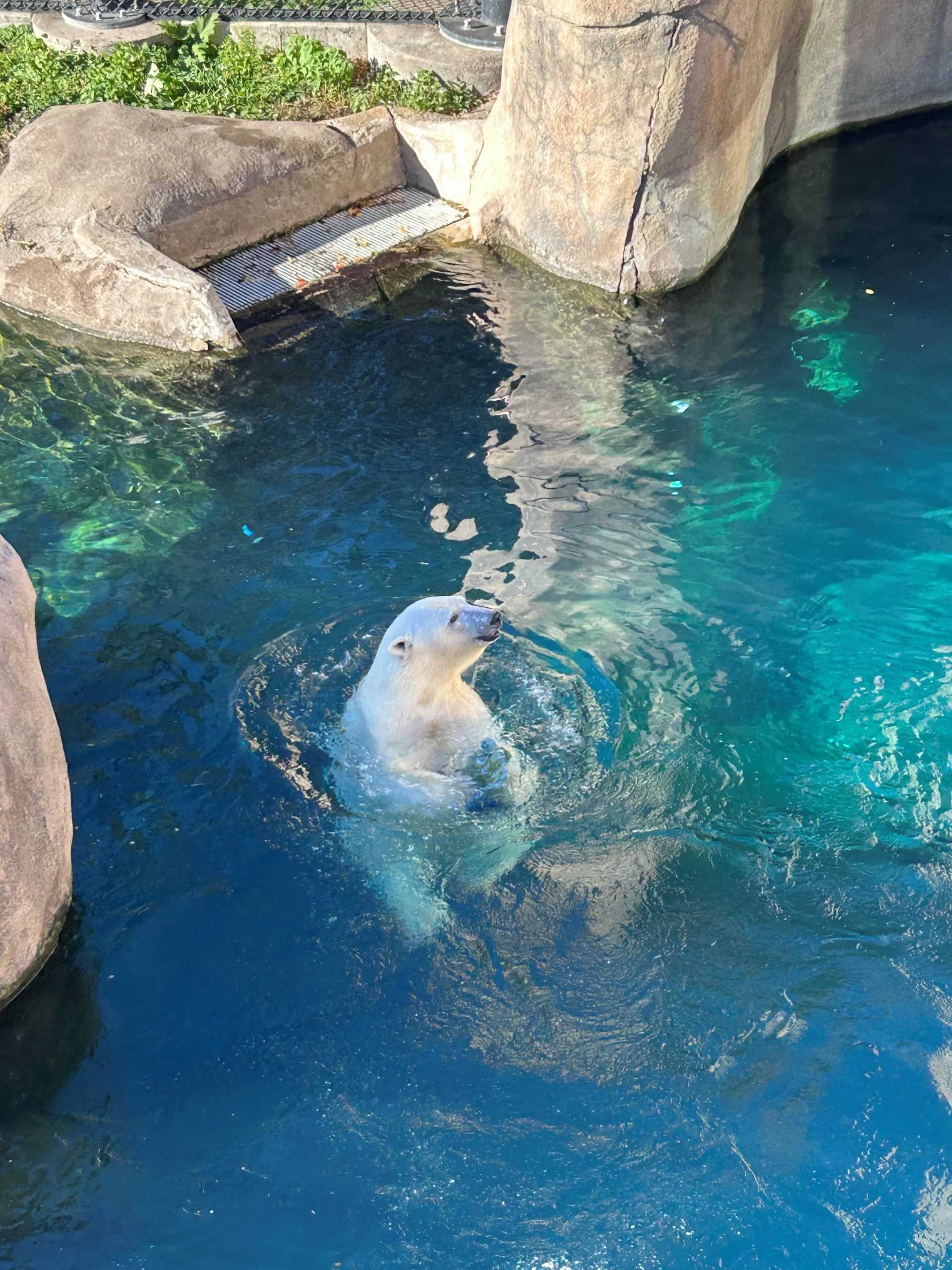
Astra, the 5-year-old polar bear who arrived at the Como Zoo in October, has now settled into her new home and routine.
Born at the Detroit Zoo, Astra spent two years with her mother and twin sister before being transferred to the Point Defiance Zoo in Tacoma, Washington, said Allison Jungheim, Como Zoo senior keeper.
Jungheim, a Como Zoo employee for 24 years, also serves as the studbook keeper for the North American population of polar bears.
“All bears in human care in zoos in the United States and Canada are included in my studbook,” she noted.
Jungheim and her team recommended Astra’s transfer to the Como Zoo based on her age and the fact that resident polar bear Kulu, a 6-year-old male, is also coming into his breeding age.
The other polar bears at the zoo are Neil, 30, and Nan, 31, although most polar bears in human care live only into their late 20s.
When a new bear arrives, it is initially isolated from the resident bears. However, the bears are close enough to see and smell each other. Keepers determine when it is time to increase interactions based on observed behaviors, Jungheim said.
Bears can choose between indoor and outdoor enclosures. With two completely separate habitats, newcomers like Astra can have their own space for as long as needed.
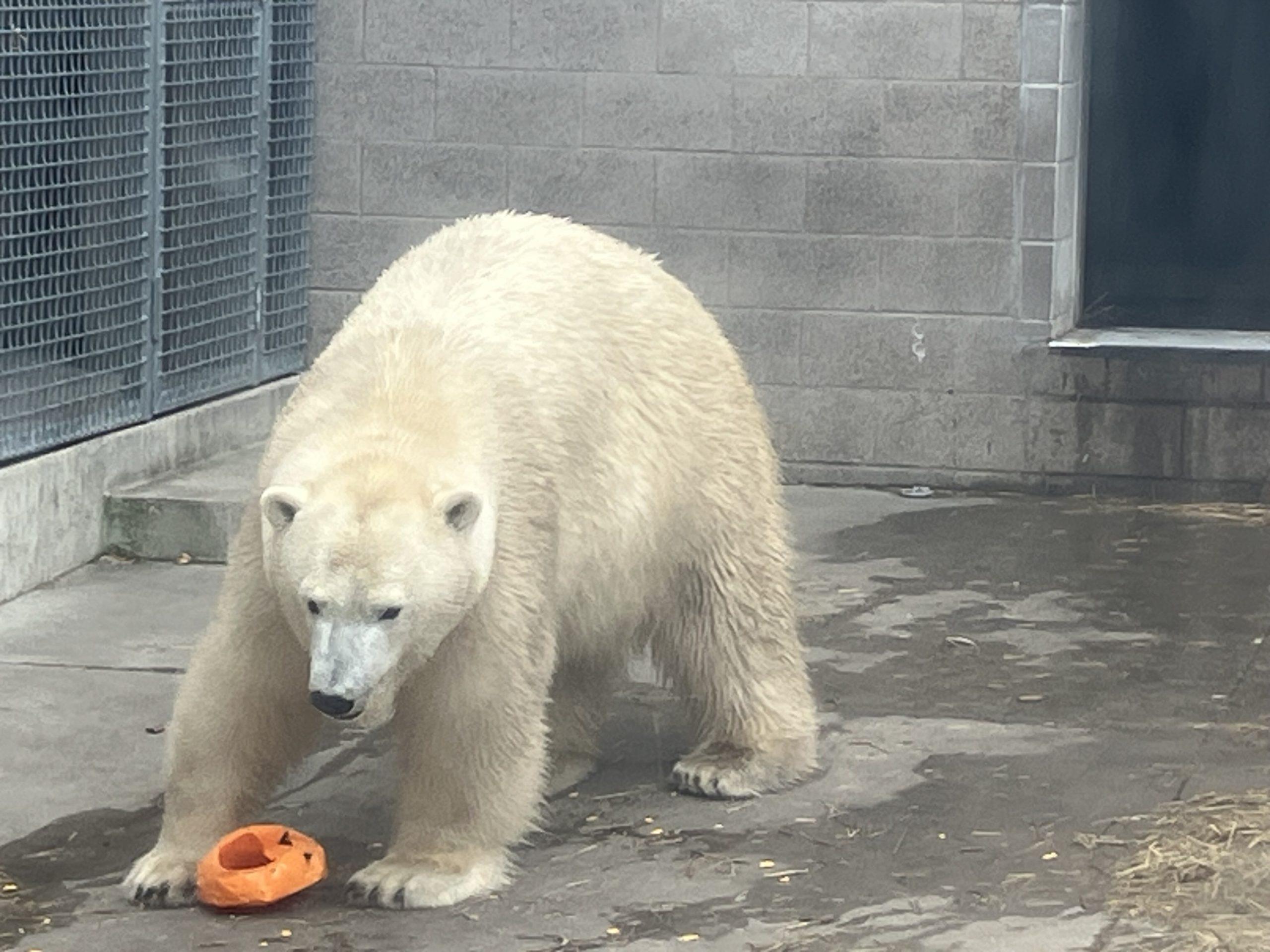
Jungheim said she enjoys seeing the bears interact. The bears are offered a variety of enrichment activities although they tend to crush most of their toys.
Polar bears breed from mid-February through April but then experience delayed implantation. The mothers-to-be bulk up throughout the summer, gaining about 300 pounds before implantation occurs in early fall, she added.
The cubs are born 60 days after implantation and weigh just one pound at birth, which occurs between mid-November and mid-December. They grow rapidly, reaching 300 to 400 pounds within two years, she explained.
The polar bear diet at the zoo consists of a meat mix, polar bear chow, capelin and herring, shank bones, carrots, lettuce and lard.
Jungheim said she and her team hope Astra and Kulu will breed early next year, potentially giving birth to one or two cubs in the fall.
For now, it is uncertain how long Astra will remain at Como Zoo, Jungheim said. “It is best to breed polar bears early and often for the greatest chance of survival,” she said.
Jungheim recommends visiting the polar bears in winter because it is a much quieter time at the zoo.
Janet Wight is a regular freelance writer for the Bugle.
Photo: New to Como Zoo’s polar bear exhibit this fall: Astra. Photo courtesy Como Zoo.
