
By Eric Erickson
Students throughout the St. Paul Public Schools (SPPS) will be expected to comply with a new district policy concerning cell phone usage during the 2025-26 academic year.
While there may be slight variation in protocols among the St. Paul high school buildings and nuances among implementation methods, the goal is the same — limit distractions to improve student learning.
SPPS adopted its cell phone policy last February, as directed by a 2024 Minnesota state statute: “A school district or charter school must adopt a policy on students’ possession and use of cell phones in school by March 15, 2025.” (121A.73 School Cell Phone Policy.)
The state directive gives districts wide latitude, but educators, school boards and lawmakers point to the same challenges that have impacted student learning, including decreasing academic attainment and mental health.
Staff and leadership in SPPS have known this for years and made many attempts to curb student usage, and in some cases, dependency on their personal electronic devices. Enacting initiatives to educate students about harm and encouraging and reminding students to keep their phones turned off during classes had moderate success before the pandemic. But distance, or virtual, learning put a dent in those endeavors.
When SPPS students returned to their classrooms after a year of virtual learning, the challenges of keeping cell phones — those magical, hand-held computers and social connectors — away for an entire academic period, let alone a seven-hour school day, were overwhelming.
Many students couldn’t resist accessing their phones in class, while teachers felt incapable of enforcing a phone-free classroom. Hence, the quest for clear policy to guide students, parents and educators.
The new SPPS policy (550.00) is two pages long and covers purposes and values, definitions and, most directly for stakeholders, a general statement found in Section III:
“Personal electronic devices are not allowed during school hours. They should remain at home or locked in lockers. If students choose to carry their personal electronic devices, they must be completely turned off and out of sight.”
That cell phone policy statement is followed by acknowledging that high schools can develop a documented plan to address areas such as lunch or between class periods. Individual schools will also need to craft their systems of enforcement.
Like any public policy, its effectiveness will depend on the effort and commitment of the implementing population and the cooperation of all stakeholders. Fortunately, there was progress throughout SPPS in the 2024-25 school year as administration responded to the Minnesota statute and anticipated the formal passage of SPPS policy.
At Como Park Senior High School, “out of sight, out of mind” was a simple expectation about cell phones that made a difference. Backed by an official district policy, Como principal Diana Brown anticipates further success.
“Establishing a clear and consistent policy has helped set expectations for students and staff, creating a more structured environment,” Brown said. “With a strong vision and thoughtful execution, I’m excited to see the benefits for students’ focused academic engagement. I believe the long-term outcomes will be even more impactful.”
Eric Erickson is a social studies teacher at Como Park Senior High School and is a regular freelance writer for the Bugle.
—-
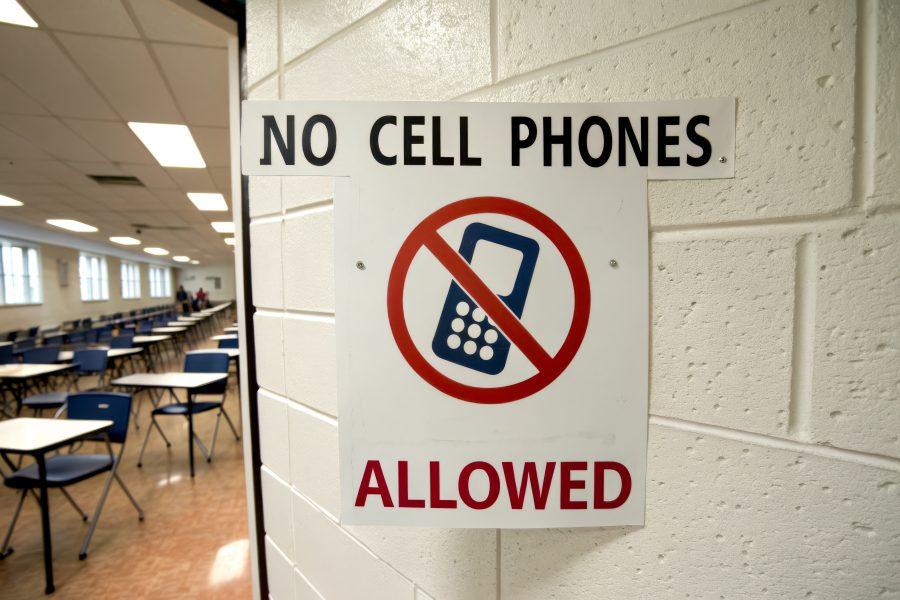
Stock photo used (No Cell Phones Allowed)
