

By Sarah CR Clark
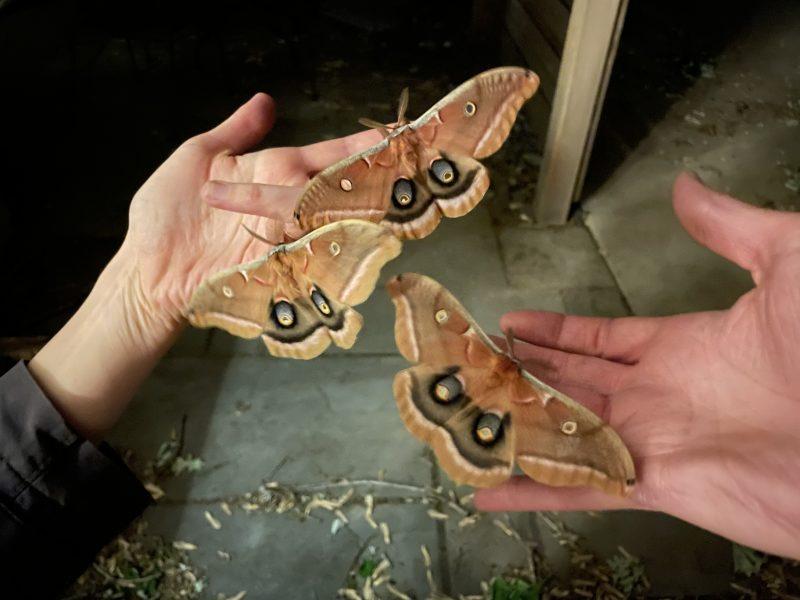
Tucked away in Matt Hoffman’s St. Anthony Park backyard, more than 20 polyphemus cocoons and black swallowtail chrysalises have safely spent the winter.
Matt expects both the moths and butterflies to emerge sometime around Memorial Day.
“It’s fascinating to enjoy the entire life of an animal, and the life stages of moths and butterflies are some of the most varied in the entire animal kingdom,” Hoffman said.
“And there’s a sense of completion too, you know. They lay eggs, you enjoy the caterpillars, then get a little break while they’re in a cocoon or chrysalis, and when the moth or butterfly emerges—it’s like, Bam! You finished it! Compared to a cat or dog, which is a long-term relationship, it’s a short, satisfying project.”
A family doctor, Hoffman was raised in St. Louis. He met his wife, Lauren Maurer, in medical school at St. Louis University and the couple moved to St. Paul in 2011.
Hoffman explained, “I got interested in caring for and raising moths and butterflies when my wife started raising monarchs.”
When their oldest child was very young—almost 10 years ago—the family enjoyed finding monarch caterpillars in their yard, which they would then bring into the house to observe their lifecycle.
“From there, I started looking for caterpillars everywhere,” Hoffman said. “I really got into the caterpillars, to be honest, more than the moth or butterfly stages because when you’re raising them almost all the time you spend with them is when they’re caterpillars. And the caterpillars are fun! They’re very active and it’s interesting to watch them grow.”
In addition to monarchs, Matt and his family have raised giant, black and tiger swallowtails, along with many native moth species.
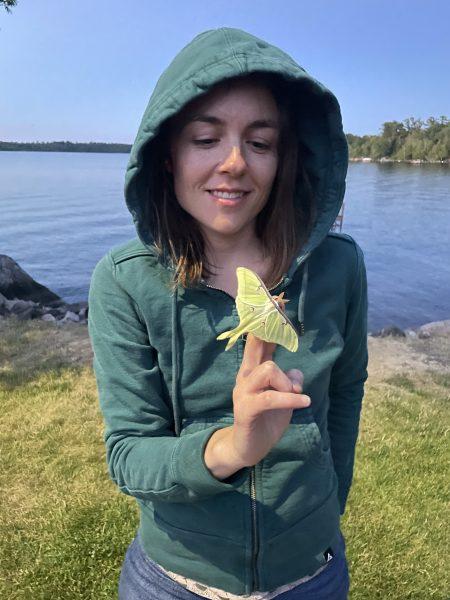
“No one thinks of the moths!” Hoffman said. “People think of butterflies first—they’re colorful and out during the day, whereas the interesting moths are nocturnal. I didn’t know what was out there when I started.”
“Butterflies are really just a family of moths,” Hoffman explained. Both belong to the order Lepidoptera. “They’re all one group—just specialized, day-flying moths.”
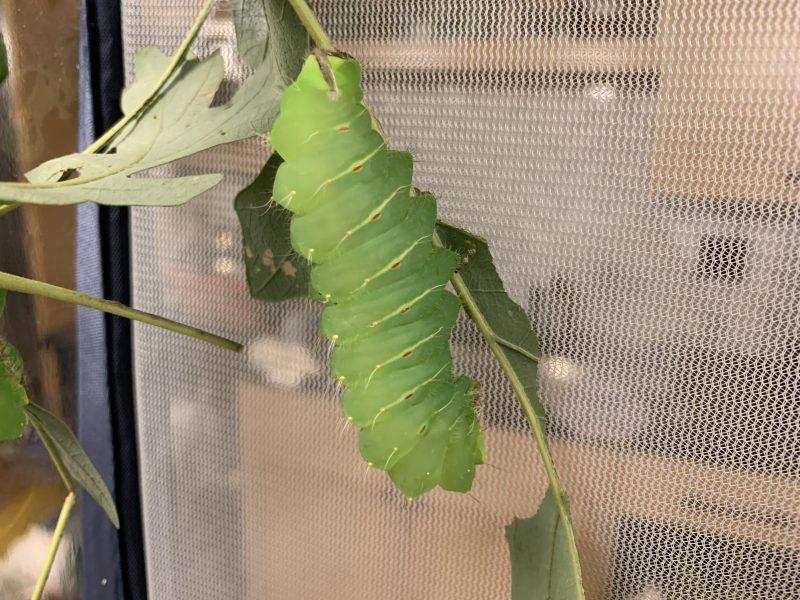
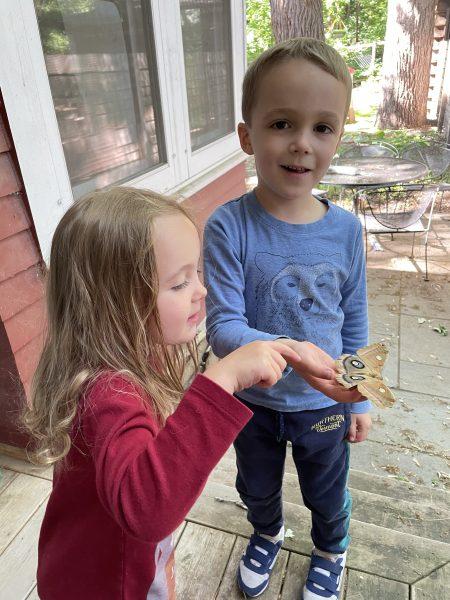
Matt added, “My daughter, Violet, found a polyphemus moth in my in-laws’ yard, which is really the jackpot. Now I know they are the most fun caterpillars and moths to raise. The moth is beautiful, and the caterpillars get so big that you can hear them eating.”
According to the state DNR’s Biological Society, Minnesota is home to nearly 2,500 moth species, including four giant silk moths: polyphemus, promethea, cecropia, and luna. All four live in the metro area, and Hoffman has raised three of them.
Matt is especially experienced in raising and breeding polyphemus moths and is excited for his fifth generation to emerge this spring.
“The interesting thing about moths is that they have varying lifestyles and they are some of the best mimics in nature,” Matt said.
“For instance all caterpillars look the way they do for a reason; they might be the same color as the plant they’re on, they might try to look like a different kind of caterpillar or a snake or a poisonous bug.”
Some caterpillars even mimic bird poop. “Black swallowtails, for example,” said Hoffman, “have tiny caterpillars in their earliest instar that look like bird poops.”
As they grow, they change dramatically. For giant swallowtail butterflies, caterpillars resemble big bird poops. The reason is that animals usually avoid poop.” This mimicry helps small caterpillars survive.
Hoffman’s knowledge of moths and butterflies has been self-guided. Inspired by caterpillars he has found in the wild, Hoffman began learning everything he could about caterpillars, food sources and the best ways to release adult butterflies and moths.
His favorite butterfly and moth resources are the website iNaturalist and Princeton Field Guide’s “Caterpillars of Eastern North America,” by David L. Wagner.
This spring, Matt and his family plan to plant more parsley and dill to attract black swallowtails, common rue for giant swallowtail butterflies, and other native plants to attract a wide variety of moth and butterfly species.
Sarah CR Clark is a regular freelance writer for the Bugle.
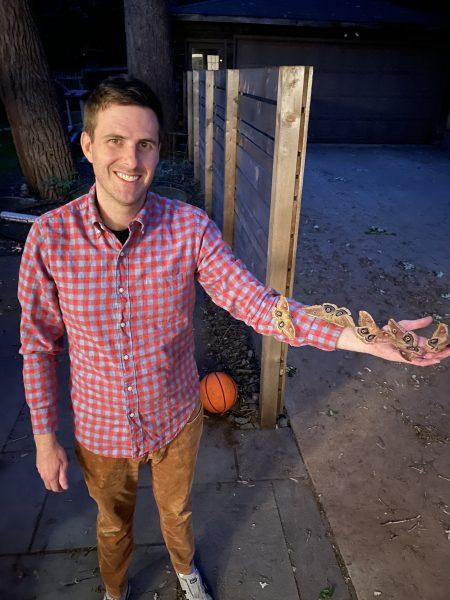
Photo: Matt Hoffman shows us butterflies that he has raised. Submitted photo.
Photo: A polyphemus caterpillar raised by Matt Hoffman just before making a cocoon. Photo by Matt Hoffman.
