

By Janet Wight
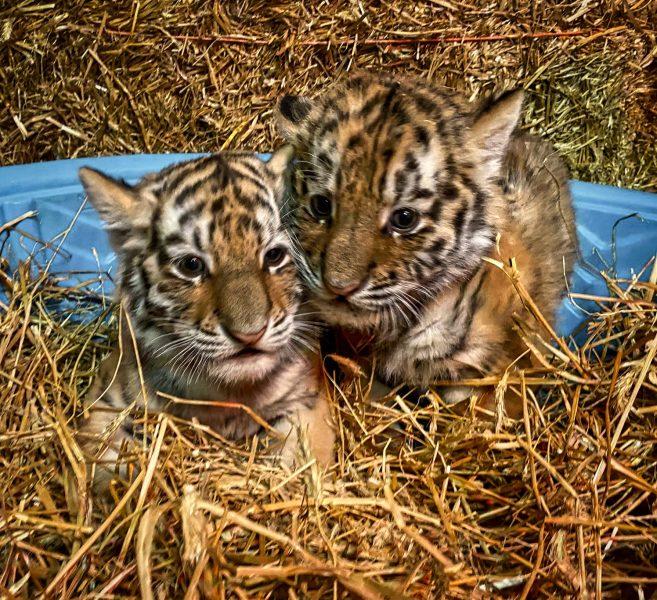
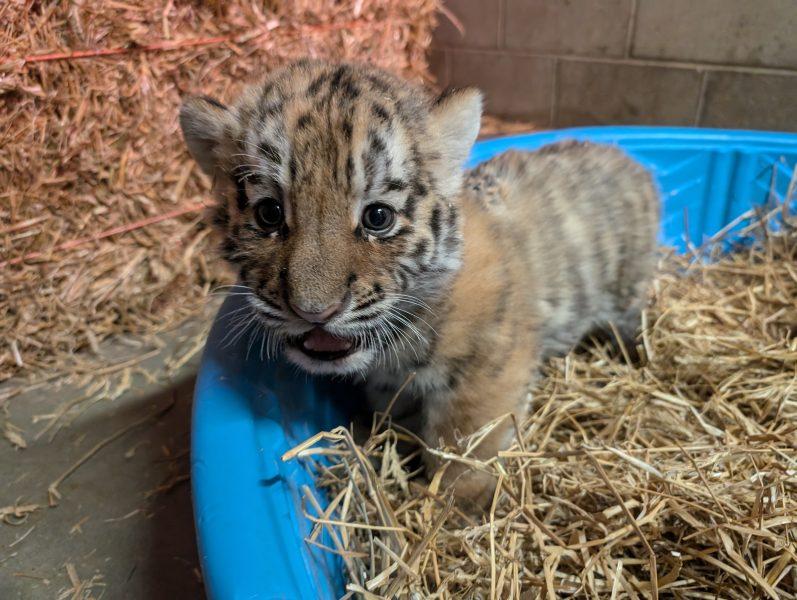
Twin Amur tiger cubs were born at the Como Zoo on Aug. 29, the first such tiger cub births at the zoo in more than 40 years.
Amur tigers, formerly known as Siberian tigers, are classified as endangered by the International Union for Conservation of Nature (iucnredlist.org), so this was a landmark event.
The cubs were named Marisa and Maks by two longtime zoo volunteers, according to Como senior zookeeper Jill Erzar.

Erzar praised all of the Como zookeepers involved in the tiger cubs’ births since they were instrumental in this successful outcome.
“There are only about 100 Amur tigers in captivity. It is such a thing to celebrate,” Erzar said, especially since both Bernadette and father Tsar are first-time parents.
Surprisingly, Como zookeepers had no way to confirm whether mother Bernadette was pregnant until the babies arrived.
Female Amur tigers exhibit cycling behaviors which indicate their receptivity to males. These behaviors include vocalizing, laying down and rolling on the ground. Since Bernadette had mated in mid-May, and was not exhibiting cycling behaviors, pregnancy was a real possibility, Erzar explained.
Some tigers are seasonal cyclers while others cycle year-round. Since Bernadette just arrived at the Como Zoo in October 2023, the zookeepers were not certain which type of cycler she was. Although she wasn’t very interested in food the day before the birth, that is not unusual for carnivores. Since tigers do not gain much weight during pregnancy, the staff remained unsure about her status until the birth.
Knowing that Bernadette could be pregnant, a written birth plan was developed based on the median pregnancy duration (104 days) for captive Amur tigers.
A cubbing den was prepared inside of the tiger building well before the potential birth. This was both a familiar and comfortable space for the mother since she had been fed and trained at that site, Erzar said.
Once the cubs were born, the zookeepers watched anxiously to confirm that Marisa and Maks were successfully nursing, since an insufficient milk supply is always a concern with first-time tiger mothers, Erzar said.
Because zookeepers never share space with adult tigers, they relied on video cameras to monitor Bernadette and her interactions with her cubs.
The Como Zoo participates in the Species Survival Plan (SSP) which is managed by the Association for Zoos and Aquariums. This steering committee provides suggestions for breeding pairs.
“It is like Match.com, but they are looking for genetic traits instead of personality traits,” Erzar explained. This led to Bernadette’s arrival last year to Como Zoo.
Erzar hopes the cubs will be put on display in mid-December after receiving their final round of vaccinations. Exactly when the cubs are eventually put on display depends on the weather and if they can climb up and down the steep banks of their enclosure, she added.
The customary plan would be to keep Marisa and Maks at the Como Zoo for two to three years. At that time, the SSP would recommend a long-term move to another facility for each of them.
However, with Como’s plans for a new cat complex underway, it is possible that all of the animals will need to be placed in other facilities within the next few years.
Zoo visitors gain an understanding of these wild animals by making a connection with them, Erzar noted. “It is important to understand what our purpose is, and that is to educate and tell our story.”
Janet Wight is a regular freelance writer for the Bugle.
