

By Christina Evans
Have you ever thrown out soggy lettuce from the bottom of your produce drawer or wondered if your leftover Chinese food has lingered too long in the back of the refrigerator?
If so, you’re not alone.
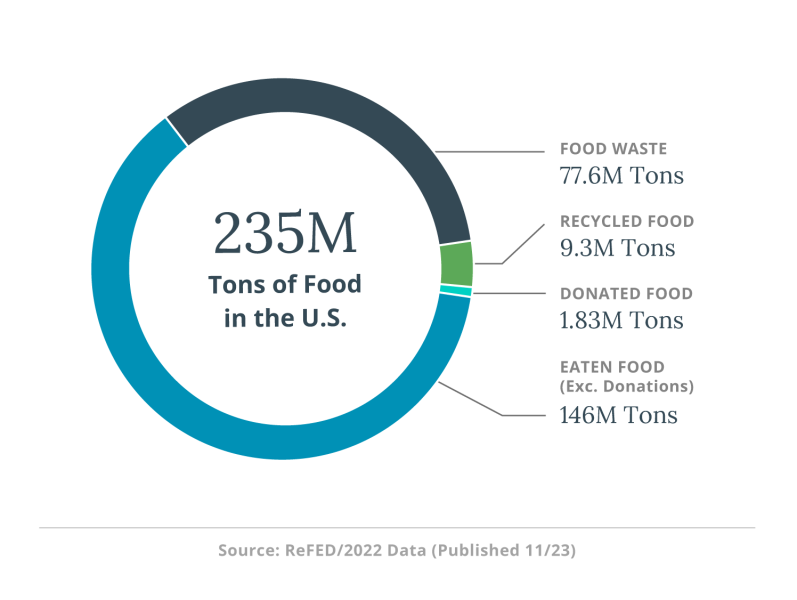
Globally, a shocking 33% of all food produced for human consumption is lost or wasted, according to a United Nations estimate.
The term food waste refers to food that is not consumed by humans but is recycled or discarded. It’s a systemic problem, with food loss occurring at every stage of the supply chain: agriculture, wholesale, retail and residential.
The big picture
The consequences of food waste on our climate and communities are immense.
When we waste food, we’re wasting the opportunity to nourish people, which is frustrating considering the numbers of Americans in need. The U.S. Department of Agriculture estimates that in 2022, 12.8% of U.S. households were food insecure. Food should feed people, not landfills.
There is also an environmental cost.
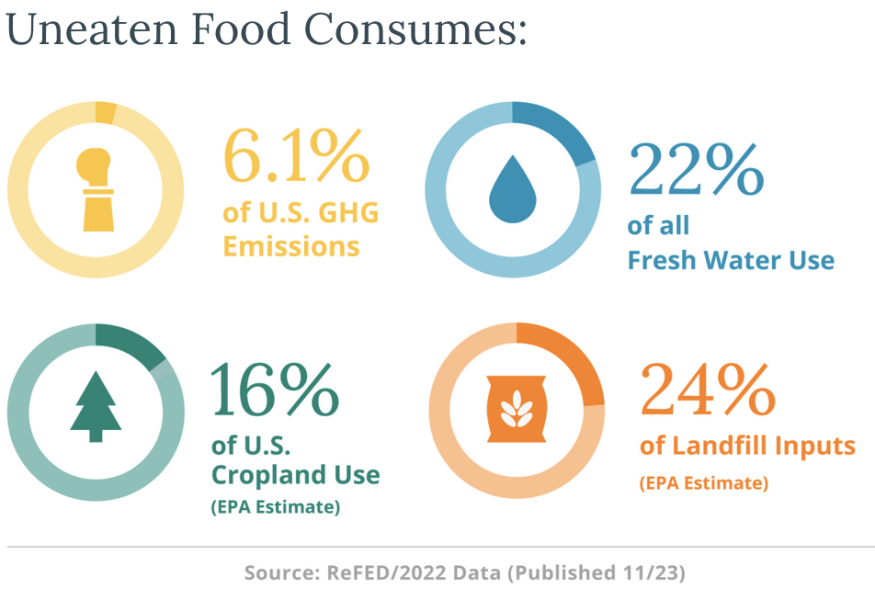
Whatever is left uneaten has already required resources to grow, harvest and transport. On top of these greenhouse-gas-emitting processes, when wasted food reaches landfills it produces methane, a greenhouse gas 28 times more potent than carbon dioxide at trapping heat in the atmosphere.
Municipal landfills are the third-largest source of methane emissions from human activities in the U.S., according to the Environmental Protection Agency. Put another way, the greenhouse gases emitted by landfilled food waste equals the annual emissions of 15 coal-fired power plants. Our wasted food sitting in landfills is releasing an alarming amount of harmful greenhouse gases, warming the planet.
Around the world and at home, these staggering statistics have grabbed the attention of governments, business leaders and concerned people who recognize the need for immediate and coordinated action.
Minnesota this fall will receive a $200 million federal grant to reduce food waste and climate pollution across the state, helping to decarbonize food systems by electrifying farm vehicles, restoring peatlands that absorb carbon and keeping food out of landfills.
Solutions: Small, consistent actions
While the issue is complex, individual consumers can be a real part of the solution.
ReFED, a U.S.-based nonprofit for food waste prevention, estimates that 48% of all wasted food occurs within American homes for various reasons: improper storage, outsized portions, impulsive grocery shopping, lack of knowledge on how to preserve food and more.
Here are a few things you can do to help build a healthier food system:
Shop smarter. Review your refrigerator, pantry and freezer and stick to your list; avoid impulse buying.
Store food smarter. Keep your refrigerator clutter-free; store leftovers in clear containers at the front. Keep perishables where you can see them and focus on “first in, first out”: if you buy more carrots, store the newer carrots behind the older ones. Clean and prep your veggies when you bring them home so they require no additional prep.
Learn to preserve. Pickling, drying, canning, fermenting, freezing and curing make food last longer. The University of Minnesota Extension Program has video instructions online.
Make stock. Save scraps for broth and start a stock bag in your freezer; bones can be simmered with veggies and herbs.
Watch your portion sizes. Be mindful of how hungry you are and practice portion control. Share entrees at restaurants.
Ditch the perfect fruit. Consider buying “ugly produce,” misshapen fruits and vegetables that are perfectly good but don’t meet appearance standards. Shop with companies like Imperfect Foods that are shifting consumer standards.
Compost. Save uneaten food from the landfill by composting, either in your back yard or by taking food scraps to the Ramsey County Waste Recycling Site (2077 Larpenteur Ave. W. in Falcon Heights). Learn more about composting from the UMN Extension Program.
Christina Evans is a member of the St. Anthony Park Community Council’s Environment Committee.