
By Pat Thompson
Decades ago, the strip of land under Highway 280—the road that’s being rebuilt this summer—was part of south St. Anthony Park’s street grid. It was home to many working families and their livelihoods.
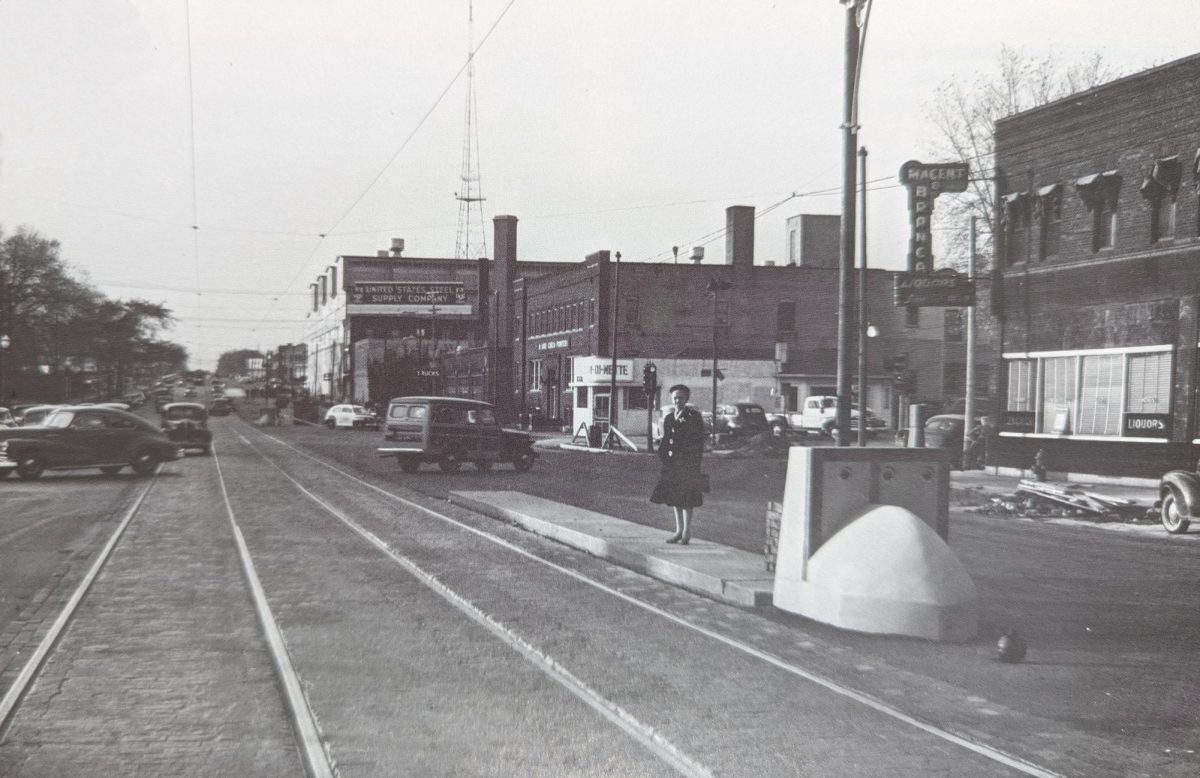
In the 1950s within that land, you would have seen the Red Star Yeast factory and many commercial buildings similar to the Mack and Midway Triangle buildings, which still stand on University Avenue.
Close by was the Immanuel UCC church, known for its stained-glass windows. Print shops, a labor local, Dial N’ Dine restaurant, and many other food- and equipment-related businesses were staffed by the men and women of the neighborhood, who lived in a variety of houses and apartment buildings.
The neighborhood people worked at the nearby factories whose buildings still exist today, too: International Harvester (now Court International) and Waldorf Paper (now the Dow Building).
Census records for 1950 show a number of retired people and women who didn’t list an occupation (many were housewives or kept boarders).
But women also worked in department store sales, machine operating, bookkeeping, stenography, credit-investigating, stock-checking, weaving, assembling and as mechanics, telegraph operators, clerks, waitresses, nurses, teachers, long distance operators and newspaper reporter.
Men were most often machine operators, mechanics, printers, rail road workers, laborers or drivers (often of trucks). But other occupations included welder, St. Paul police detective, foremen at various plants, draftsman, painters, candymakers, grain shoveler, actuary, lab tech, civil engineer, carpenters, table pad cutters, lineman, shipping manager, office manager, accountant, dental tech, sales clerk, conductor, bricklayer, and union vice president.
Some 535 people lived in homes just north and south of University Avenue.
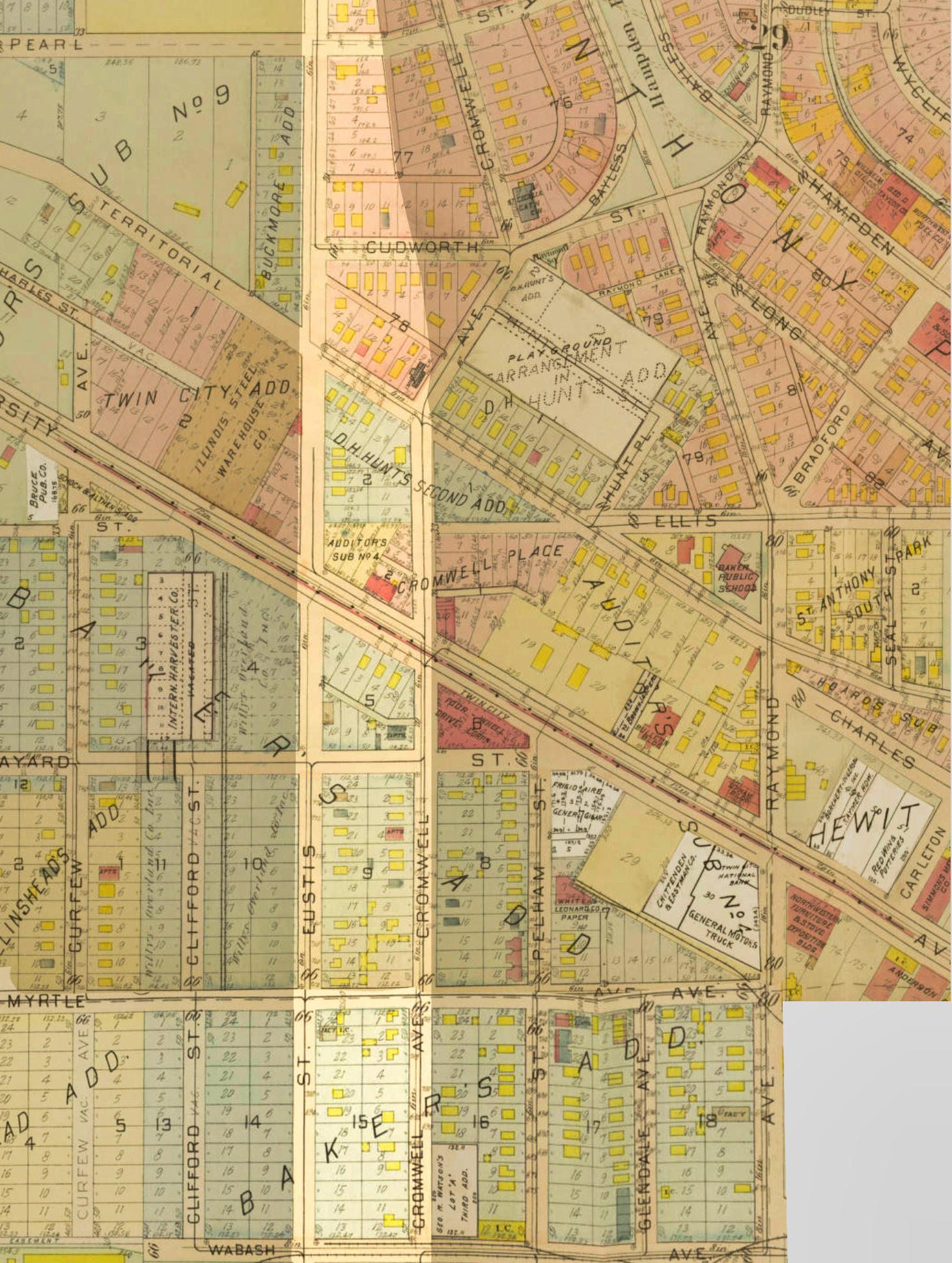
By the next census, they were being told to vacate to make room for the highway, which began construction in the 1960s.
The post-World War II era was the time of cars, suburbanization, and the beginning of freeway-building. Highway 280 was planned to “enable truck drivers to move into truck terminals in the Midway area without traveling through present traffic-congested streets” (Minneapolis Star, June 1954).
Instead, motorists have used it routinely because of St. Paul’s lack of north/south streets across the railroad tracks. With other freeways that were built, Highway 280 created a frictionless connection, helping induce demand for more vehicle trips, and leading to bad land use decisions that caused even more vehicle trips. Here as elsewhere, increasingly, cities have been designed for cars, at the expense of communities.
Lessons from the past
As we work for a livable future, what can we learn from the past?
The planners of the past could have built a regular street that connected the city—or ideally multiple streets for redundancy—instead of a freeway. Then, if one route had to be closed for repairs, traffic wouldn’t be funneled onto a single remaining street, as we see today.
If they had built streets instead of a higher-speed freeway, they wouldn’t have created the expectation of fast travel everywhere all the time within the city. That expectation has led to sprawl, loss of businesses in neighborhoods and downtowns, and overflow effects like speeding on side streets near the freeway.
In recent years, we have learned that hidden under urban freeways are places that used to be neighborhoods, part of the fabric of our communities: In St. Paul, there was Rondo, Merriam Park and south St. Anthony Park. We can’t bring them back as they were, but we can value them.
Freeways are an unquestioned aspect of 20th and 21st century American life, and key to what makes transportation the largest single contributor to climate change. Questioning their existence is part of facing the extent of the climate challenge we face in this country.
Pat Thompson is a member of Transition Town–All St. Anthony Park and co-chair of the St. Anthony Park Community Council’s Transportation Committee. If you know the story of any of these lost neighbors, email [email protected].