

By Dawn Lamm
Partridge Pea, Showy Partridge Pea, Sensitive Pea, Dwarf Cassia, and Prairie Senna
Latin name:
Chamaecrista fasciculate
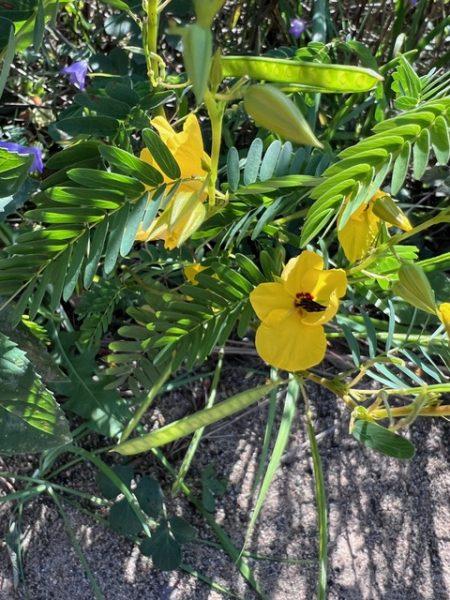
Partridge pea is a favorite of native plant enthusiasts and gardeners for so many reasons. This member of the pea family, with its bright yellow flowers and red anthers, is an annual found in prairie restoration sites and in pocket prairie gardens all around Minnesota. As a member of the pea family, it can fix nitrogen in the soil, improving growing conditions for perennial native plants by holding weeds at bay. For these reasons alone, it makes the perfect native cover crop.
In South Como, partridge pea is part of the plantings at the JamCo prairie garden. This two-stage garden, designed by Jan Ehlert of Metro Blooms and planted with a team of neighbors, is specifically designed to accommodate the capped contaminated soils of this former superfund site. Partridge pea, with its adaptability, provides forage for bees, ants, beetles and other wildlife while improving the soil in this visionary use of land that was once just a mowed patch of non-native invasives.
You’ll also find this plant in other Lawns to Legumes Demonstration Neighborhood public gardens like those at Orchard Recreation Center in Como and in private container gardens because this plant is typically somewhere between 12″ and 30″ tall.
Partridge pea demonstrates the principles of what Robin Wall Kimmerer, author of “Braiding Sweetgrass,” calls “the gift economy of abundance and reciprocity in the natural world.”
Along with supporting the microbic life in the soil by fixing nitrogen, this delicate plant with fronds of leaves that will sometimes close when touched or as the day draws to a close also offers a nutritious snack of pollen to bees and butterflies in exchange for sharing that pollen plant to plant. The sweetness of nectar is not only offered by the blossoms but also in disc-shaped glands at the base of the leaf stalks, attracting ants that in return patrol for other insects who would feed on the plant.
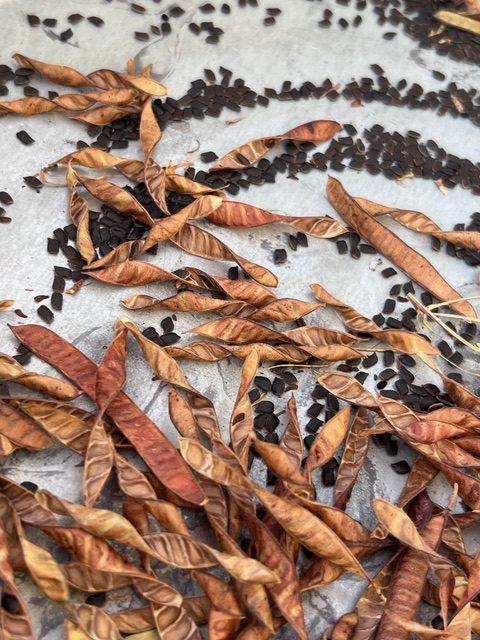
At the University of Minnesota Bee Lab l garden, the small, black diamond-shaped seeds are scattered along the paths and pavers at the edges of the beds, offering a tasty treat to migratory birds, roving squirrels and other small mammals. These seeds are scattered by a thin quarter-inch-wide-by-two-inch-long pea pod that twists as it matures and dries to propel the seeds. Those that land on bare soil will be scarified by the freeze-thaw cycle of our Minnesota winters to emerge and bloom next summer and into fall, repeating this circular seed cycle of sharing and abundance.
Gardeners like Pat Thompson of St. Anthony Park know this cycle, gather these seeds, and share them at events like the St. Anthony Park Ice Cream Social and through donations to seed libraries like Como Park Community Seed Library and the MN SEED Project. There, other gardeners will find them available to start their own crops of delicate sunny partridge pea in the coming seasons, amplifying the abundant gifts of a resilient locally adapted free seed economy.
Dawn Lamm lives in Como Park and is the founder of the Como Community Seed Library.
Photo cutline: Partridge pea in bloom in October at the University of Minnesota Bee Lab. Submitted photo.