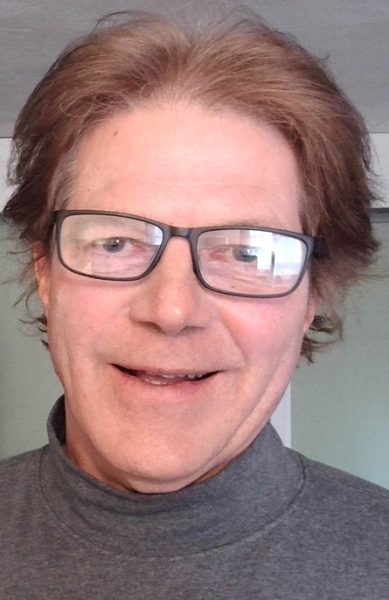

By John Horchner
“The best journalist — or adman, or editor — is someone who combines the enthusiasm of youth with the wisdom of age.”
So said William Randolph Hearst, who bought the magazine where I got my first job, Good Housekeeping, for his empire in 1911.
Maybe it was the setting — the offices in Manhattan were originally a theater for his mistress — or maybe it was my eagerness to learn. But Hearst’s quote has always resonated with me.
Lately, I’ve thought about how I can use that quote to evaluate St. Paul’s City Council choices for Ward 4’s special election on Aug. 12. Each candidate brings a certain combination of enthusiasm and wisdom to the table.
I met the candidates at a forum held May 27 at Hamline United Methodist Church, hosted by Unidos, a nonprofit advocate for climate equity funding. They are Chauntyll Allen, Molly Coleman, Cole Hanson and Carolyn Will.
Currently, the city has three programs aimed at housing, climate resilience and environmental justice: Healthy Homes, Power of Home and an Emergency Rehab Loan Program. All three were mentioned during the forum. However, the city spends far less than is needed to make these programs viable.
According to Mary Pat Dunlap from Unidos: “Climate resilience and energy infrastructure currently make up less than one tenth of 1% … of the city’s budget.” Yikes.
Allen grew up in the Rondo neighborhood and now lives in Midway. She knows her way around local politics, currently serving as a member of the St. Paul school board. She’s focused on attracting more dollars to be spent in the city so we can reduce the burdens on homeowners.
To Allen, asking residents to “vote yes” again and again isn’t a solution. “The long game cannot just continue to be referendums on top of referendums,” she said.
Later, in answer to a follow-up question by email, Allen added, “The city should set certain ordinances for developers as a campaign to build a clean city. Developers could advertise as a clean development and the community would support the project.”
Coleman is a lawyer, nonprofit leader and mom raising her family in Hamline-Midway. She’s also the daughter of former St. Paul mayor Chris Coleman — a detail she didn’t bring up at the forum.
What she did discuss was the possibility of using new revenue from the recently passed Xcel franchise fee agreement to fund housing and climate efforts.
“Unfortunately, last year, the city council made the decision to only collect those franchise fees for one month rather than two, impacting our ability to fully fund programs,” she said.
Among all the candidates, Coleman offered the most technocratic and data-informed answers. She maintained we don’t need to invent new programs — just invest in and expand what’s already working.
This includes Healthy Homes, a pre-weatherization program that helps people lower energy bills and prepare homes for electrification, and Power of Home, a program that provides grants and assistance for full electrification, like switching from gas to electric heating and appliances.
Coleman said the city needs to scale these up and widen access:
“Right now, those programs are supporting homeowners. We have to build them out so that they’re supporting renters, small businesses, churches.”
Knowing what it costs to reroute a single home’s gutters to prevent water damage, to dig up a basement floor for radon mitigation, to remove knob-and-tube wiring, and to safely remove asbestos that wrapped the basement pipes of our old St. Paul home — I couldn’t help but feel a quiet kind of panic. St. Paul’s aging housing stock will make climate upgrades a serious technical and financial challenge.
At the forum, Coleman did not seem deterred: “We know what that looks like. We just have to fund it. We have to get the job done.”
Hanson grew up on a farm, where he learned an early lesson: You can do whatever you want — as long as you get your chores done. For him, St. Paul is that farm now, and climate change is one of the chores the city has left unfinished.
For Hanson, climate change doesn’t exist in a vacuum. He sees safety, public health and infrastructure as intertwined with environmental policy.
“If people don’t feel safe taking the train, then that’s an incredible investment in our green infrastructure that’s gone to waste,” he said.
Hanson works as a public health educator and dietitian at the University of Minnesota — someone who takes a preventive approach to health. In the forum, he drew a clear parallel between prevention and climate.
For example, Hanson advocated for full electrification of the city’s building code — no new buildings with gas infrastructure going forward. His message was that investing now prevents harm later — not just to the climate, but to public health as well.
Carolyn Will, who hadn’t officially filed in time to make it to the candidate forum, was quick to respond to my questions by email — and in some ways, her absence made sense. She doesn’t present herself as a typical activist or policy wonk. Instead, she leads with business pragmatism.
A longtime public relations professional, Will has kept her own firm going for years in a highly competitive sector. In her view, that experience — budgeting carefully, managing projects, being accountable to clients — makes her well-equipped to help run a city that’s long on ideas but short on execution.
“When I have less, I spend less,” she wrote. “If I bid out a project for one fee, I need to deliver it for that price … The city needs to start hustling.”
She also believes the city needs to focus on fixing the basics before reaching for trendier projects:
“Residents want value for their taxes, and they want attention paid to getting the basic services running well first, before we add in the trendy new items.”
After rewatching the forum on YouTube, I keep coming back to something one of them said — maybe the quote of the night, whether live or later by email. It wasn’t lofty or ideological. It was a quiet reminder that residents want the basics done well first.
Whoever wins this seat will need to bring more than loads of enthusiasm, they’ll need to get their chores done.
John Horchner is a professional writer who lives in St. Anthony Park.