

By Kathy Henderson
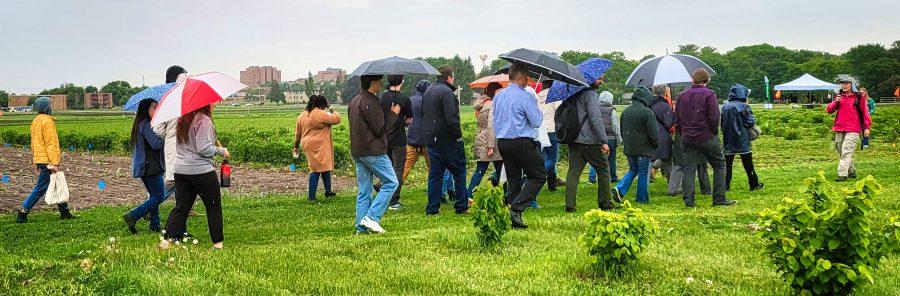
Since when did the University of Minnesota start growing umbrellas?
That might have been your thought on May 28, if you happened to drive by the U’s agricultural fields that border the St. Paul campus along Larpenteur Avenue at Fairview or Cleveland avenues.
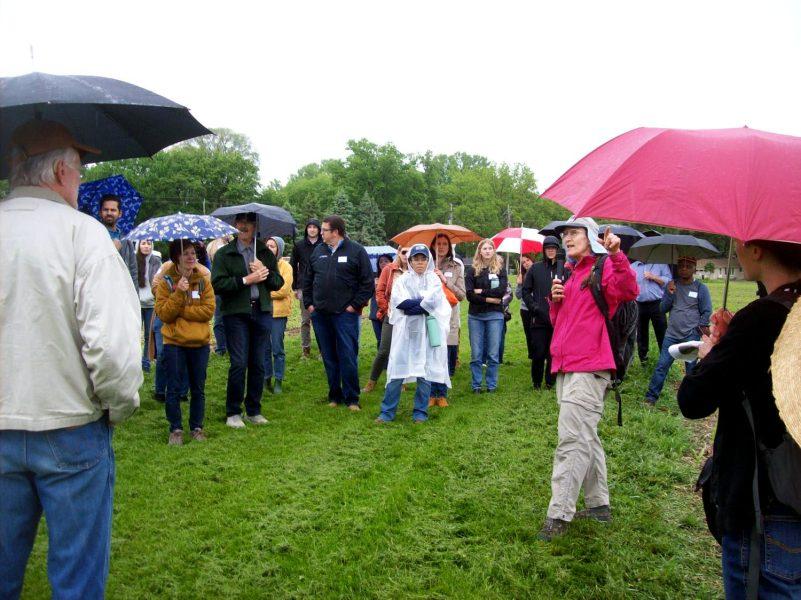
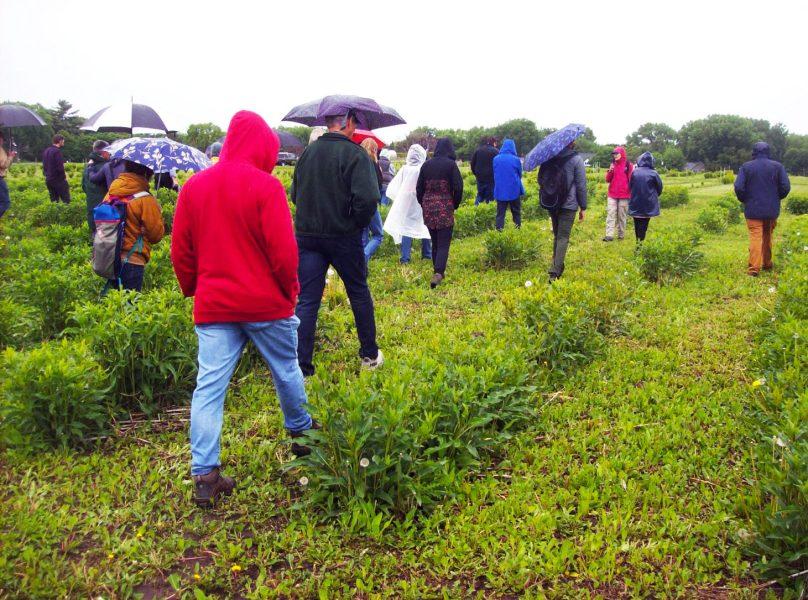
In fact, those umbrellas weren’t growing out of the ground but were being held by people attending the first Forever Green Field Day, which was open to the public.
An estimated 225 people turned out on a miserably cold and rainy afternoon, demonstrating people’s strong interest in the Forever Green Initiative or just their curiosity about what is growing in those fields.
The Forever Green Initiative is co-directed by Nick Jordan and Mitch Hunter, both of the University’s Department of Agronomy and Plant Genetics — and both St. Anthony Park residents. It was co-founded by Jordan and the late Don Wyse in 2012.
In developing new crops, the initiative is recognized for its comprehensive approach that combines basic scientific research with crop commercialization efforts. It is a research endeavor of the College of Food, Agricultural and Natural Resource Sciences, or CFANS.
With umbrellas up and sturdy boots on, groups of students, researchers, farmers, scientists, interns, community members, entrepreneurs and nonprofit and agribusiness representatives eagerly boarded buses or found seats on tractor-pulled field wagons in anticipation of tramping through soggy fields to get a bird’s-eye look at the cover crops growing there.
Trailing after their U guides, the visitors encountered plants with recognizable names such as sunflowers and hazelnuts, as well as the not-so-familiar ones: Kernza®, silflower, domesticated winter pennycress and winter camelina.
Avid home hobbyist gardener Jenny Offt took the day off work to be there. Like many nearby St. Paul campus residents, she had driven by, walked by, and even walked through the agriculture fields, often wondering what was planted there — and why.
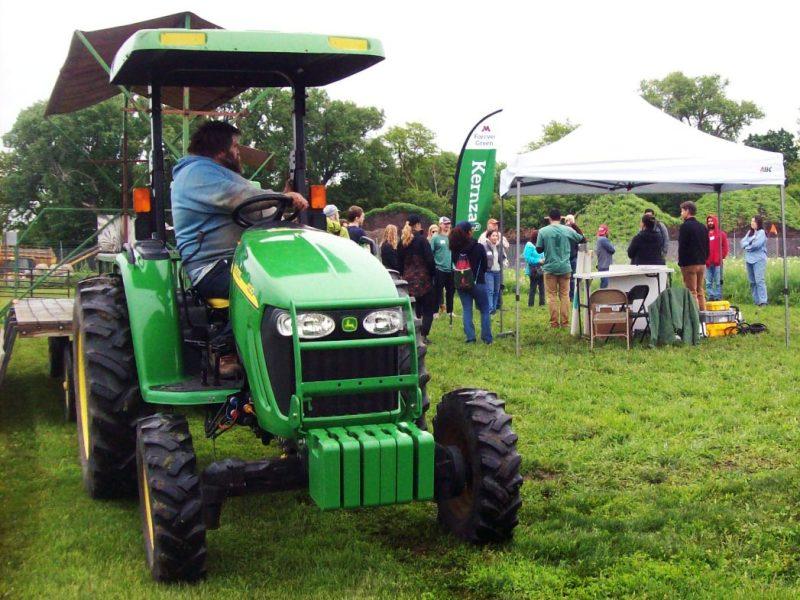
In finding answers, Offt said she became absorbed in the sustainability connection of clean water, air, soil health and product. She also grew in admiration for the perpetual curiosity of the scientists, with their patience and trial-and-error commitment.
“It’s as if they’re thinking, ‘Well, that didn’t work, but if we just tweak this’ … The enthusiasm, energy and friendliness of presenters and participants made me feel as though I was a part of something visionary,” Offt said.
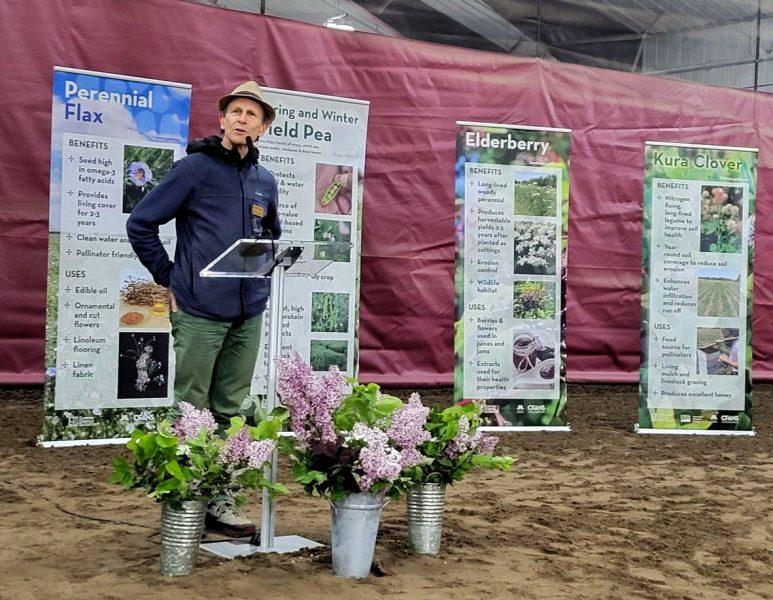
Between field excursions, the Leatherdale Equine Center’s Barenscheer Arena provided refuge from the rain, hosting displays, refreshments and vendors.
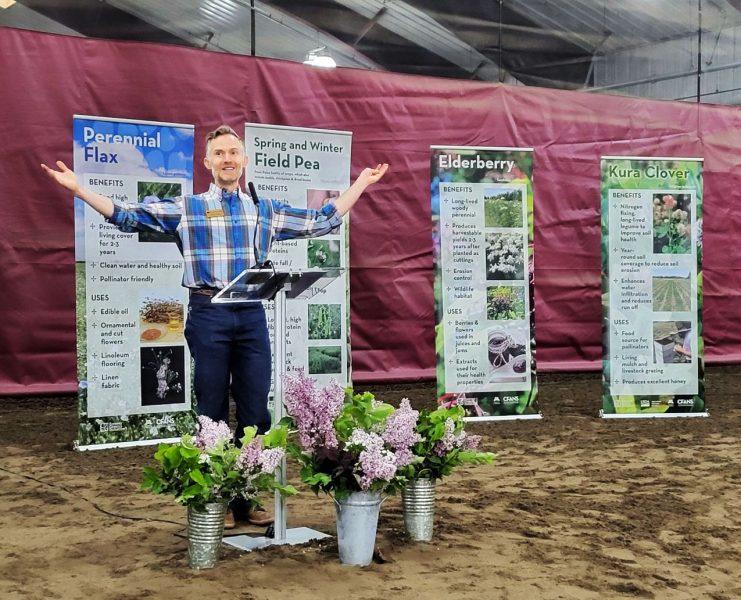
During the welcome program, Jordan expressed gratitude to people — and to plants — and enthusiastically advocated that “crops can change the world.” Hunter, noting so many new crops under development, described the U as the “cradle of the future of agriculture.”
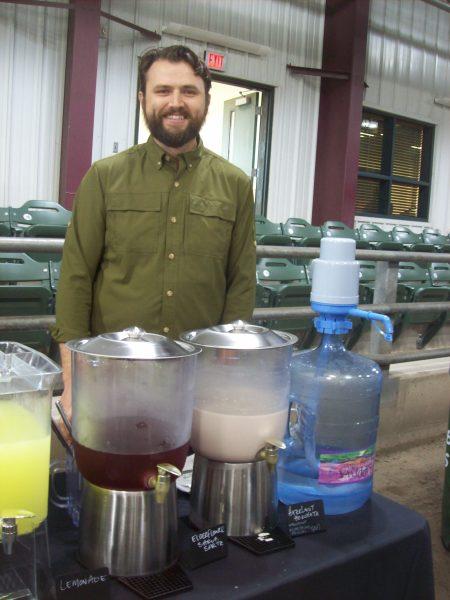
Dan Rusoff of Eat Your Heart Out Catering in Falcon Heights reported his food service business gave away 240 winter rye brown butter chocolate chip cookies and 10 gallons of Hazelnut Horchata beverage during the event. Other Forever Green-inspired snacks and drinks from EYHO included bars, sumac-dusted popcorn, lemonade and sparkling elderflower.
To learn more about the U’s Forever Green initiative, visit forevergreen.umn.edu.
Submitted by the International Institute of Minnesota.
Photo cutlines: University of Minnesota research scientist Lois Braun led a Forever Green Field Day umbrella parade through a St. Paul campus agricultural research field on May 28. Photo by Jan Geisen.
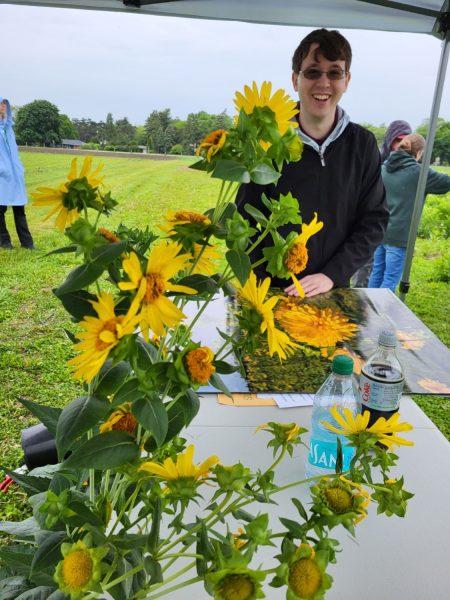
At the Forever Green Field Day at the U of M St. Paul campus, PhD student Chase Krug shows off silflowers. Photo by Jan Geisen.
