


By Jenni Wolf
Whether we like it or not, growing older is a part of the natural aging process for people.
With normal aging comes changes in our nutritional needs and new nutritional considerations. While we can’t stop our bodies from aging, we can slow down and minimize some of the side effects and outcomes of growing older by being aware of our changing needs.
As we age there are a few common changes that occur within our bodies that specifically impact our nutritional needs and considerations. Read on to learn more about them and actions you can take to nourish a healthy body:
Sensory and oral impacts
It is not uncommon for one to experience changes to sense of taste and smell, as well as chewing and swallowing, that may impact intake, making it difficult to get needs met. These changes can be attributed to the aging process in general but are also commonly seen as side effects to medications.
If food no longer seems appealing or is difficult to eat, you may be at risk for energy and micronutrient deficiencies.
Nutritional considerations: Some people may benefit from more neutral flavors while others may prefer stronger flavors if senses are muted. Use of condiments or seasonings can also increase the palatability of food to support adequate intake. Try different food preparations to vary texture and assist with chewing and swallowing. A mouth rinse can also help those dealing with dry mouth or low saliva production.
Body composition impacts
Loss of lean-body mass commonly occurs as we age. While there are things we can do to slow this down, like resistance or strength-based exercises, this gradual change is inevitable for most.
This is important to consider as changes to body composition impact metabolism. Our metabolic rate declines with decreasing lean-body mass. This means the body often does not require as much energy, or calories, when we are older as it does when we are younger. Yet, we need to ensure we are getting enough calories to maintain lean-body mass and appropriate fat mass.
Nutritional considerations: Notice body sensations like hunger and fullness cues to guide intake decisions. Choose a variety of foods and include all three macronutrients (carbohydrates, protein and fat) at every meal. Energy balance and weight maintenance is the goal for longevity; it can be helpful to check in with a dietitian if you notice changes to weight or energy level.
Bone-density impacts
Like lean-body mass, bone density also decreases as we age. This increases the risk of osteopenia or osteoporosis.
Nutritional considerations: Calcium needs increase for women over the age of 50 and for men over the age of 70; both groups should shoot for 1200 mg/day. Vitamin D supports calcium absorption; the recommendation is 700 IU for those under the age of 70 and 800 IU for those older than 70 years. If getting these nutrients through food is challenging, a supplement is a great alternative.
Gastrointestinal impacts
The gastrointestinal (GI) tract experiences changes to motility and function as we age, which can impact digestion and absorption as well as bowel function. One might experience acid reflux, indigestion, constipation or diarrhea, which may impact ability and willingness to eat along with variety of intake.
Nutritional considerations: Experiment with timing and volume of meals; some may do better with 5-6 smaller meals throughout the day rather than the traditional “three squares.” Meet fiber recommendations to support motility and bowel patterns; men over the age of 50 should shoot for 30 grams daily while the recommendation for women is 21 grams daily. Adequate hydration also supports movement of food and waste through the GI tract; aim to drink six to ten 8-ounce glasses of water or other fluids daily. Fluid needs do vary widely so check in with your provider for more guidance.
Source:
National Institutes of Health. (2016). Nutrient Recommendations: Dietary Reference Intakes (DRI).
https://ods.od.nih.gov/HealthInformation/nutrientrecommendations.aspx#dri.
Jenni Wolf, a registered dietitian, writes about food and nutrition.
Produce variety photo: Include a variety of produce to support adequate fiber intake and improved digestion.
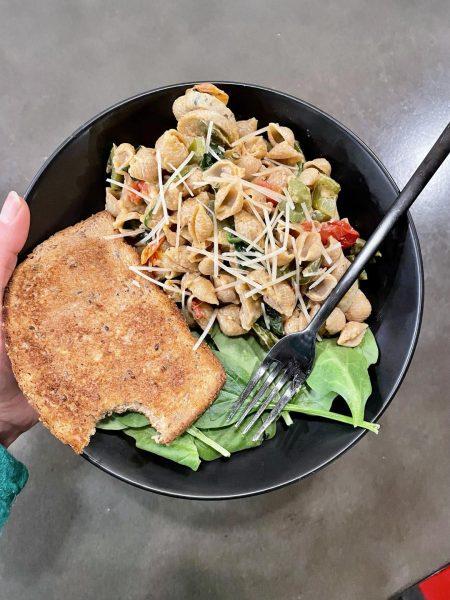
Pasta meal photo: Balance your plate and support a healthy metabolism with carbs, protein, and fat at every meal.
